Attacking Other Users

The majority of interesting attacks against web applications involve targeting the server-side application itself. Many of these attacks do of course impinge upon other users — for example, an SQL injection attack that steals other users’ data. But the essential methodology of the attacker is to interact with the server in unexpected ways in order … Read more
HTML Injection

Hypertext Markup Language (HTML) injection is also sometimes referred to as virtual defacement. This is really an attack made possible by a site allowing a malicious user to inject HTML into its web page(s) by not handling that user’s input properly. In other words, an HTML injection vulnerability is caused by receiving HTML, typically via … Read more

Install Let’s Encrypt to Create SSL Certificates

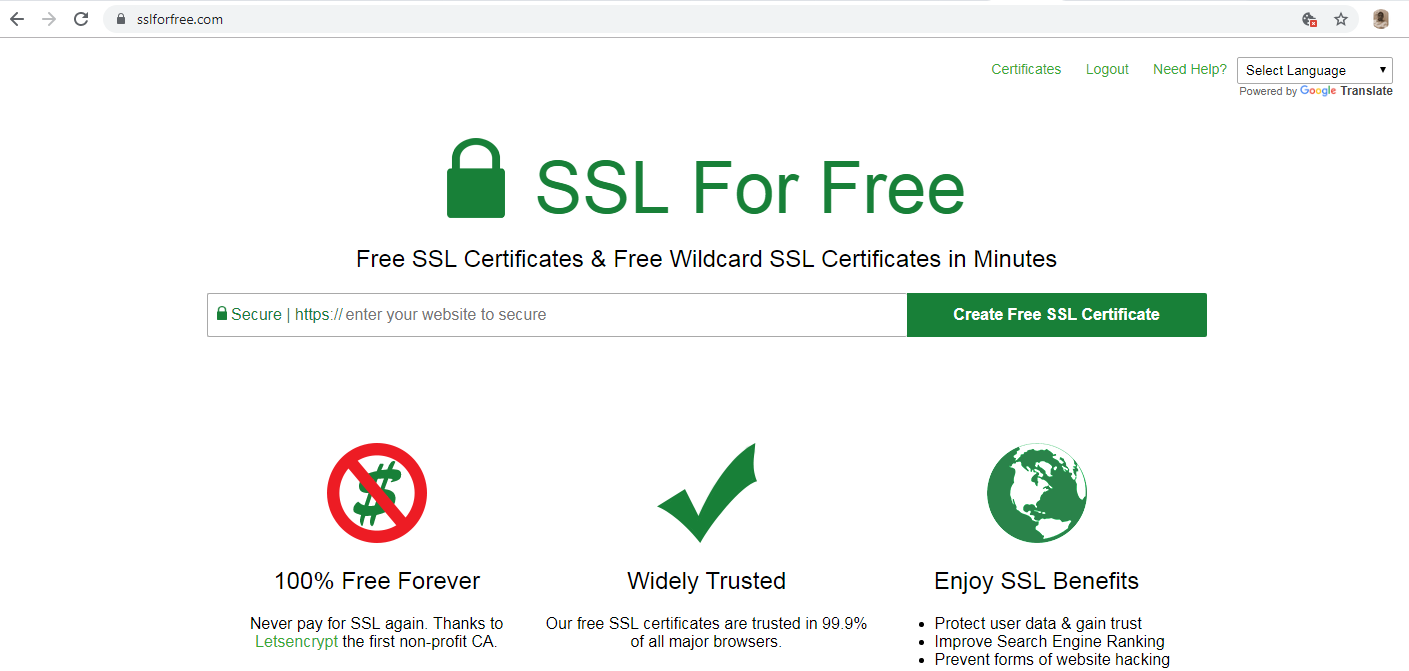
free ssl certificate

Install Let’s Encrypt to Create SSL Certificates What is Let’s Encrypt Let’s Encrypt is an SSL certificate authority managed by the Internet Security Research Group (ISRG). It utilizes the Automated Certificate Management Environment (ACME) to automatically deploy free SSL certificates that are trusted by nearly all major browsers. Start Downloading and installing Let’s Encrypt Download and Install Let’s … Read more

Securing Web Server Software

To some extent, an organization deploying a third-party web server product is inevitably placing its fate in the hands of the software vendor. Nevertheless, there is still a large amount that a security-conscious organization can do to protect itself against the kind of software vulnerabilities. Choose Software with a Good Track Record Not all software … Read more

Finding Web Server Flaws

If you are lucky, the web server you are targeting may contain some of the actual vulnerabilities described in this chapter. More likely, however, it will have been patched to a more recent level, and you will need to search for something fairly current or brand new with which to attack the server. A good … Read more

Encoding and Canonicalization Vulnerabilities

Encoding flaws have arisen in many kinds of web server software and present an inherent threat in situations where the same user-supplied data is processed by several layers using different technologies. A typical web request might be handled by the web server, the application platform, various man-aged and unmanaged APIs, other software components, and the … Read more

Path Traversal Vulnerabilities

Accipiter DirectServer This path traversal flaw could be exploited by placing URL-encoded dot-dot-slash sequences into a request. For more information about this flaw, see www.securityfocus.com/bid/9389 . Alibaba This path traversal flaw could be exploited by placing simple dot-dot-slash sequences into a request. For more information about this flaw, see www.securityfocus.com/bid/270 . Cisco ACS Acme.server This … Read more

Vulnerable Web Server Software

Web server products range from extremely simple and lightweight software which does little more than serve up static pages, to highly complex application platforms that can handle a large variety of tasks. Historically, web server software has been subject to a wide range of serious security vulnerabilities, which have resulted in arbitrary code execution, file … Read more

Attacking the Web Server

As with any kind of application, a web application is dependent on the other layers of the technology stack that support it, including the web server, operating system, and networking infrastructure. Any of these components may be targeted by an attacker, and compromising the technology on which an application depends will very often enable an … Read more

Buffer Overflow Vulnerabilities

Buffer overflow vulnerabilities occur when an application copies user-controllable data into a memory buffer that is not sufficiently large to accommodate it. The destination buffer is overflowed, resulting in adjacent memory being overwritten with the user’s data. Depending on the nature of the vulnerability, an attacker may be able to exploit it to execute arbitrary … Read more