Algorithm improves fairness of online search rankings

Cornell University computer scientists have developed a tool which can improve the fairness of online search rankings, without sacrificing relevance or usefulness. For much of the world, Google Search is the entrance to the rest of the internet (other search engines are available). With most users clicking the results towards the top of the first page of returned … Read more
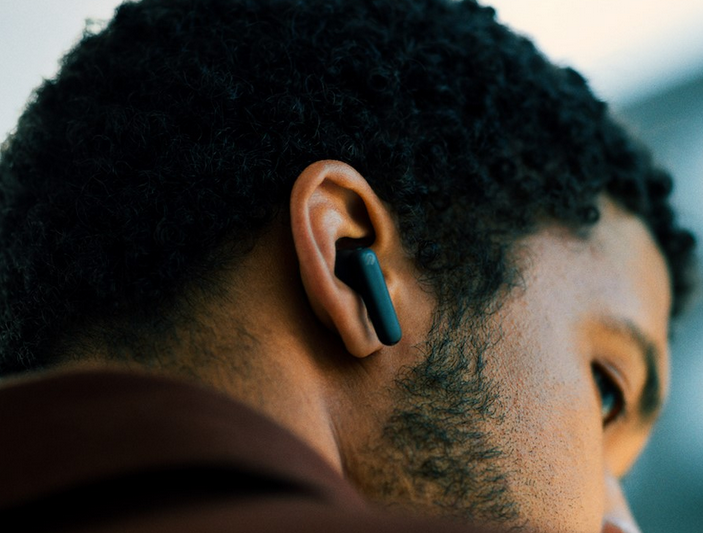
Urbanista ‘London’ ANC wireless earbuds

First, true wireless earbuds were the high-water mark for new Bluetooth audio gadgets. Now, it’s true wireless earbuds with active noise cancellation – the ANC often seen in product names, such as with these ‘London’ buds from hip Swedish audio brand Urbanista. ‘London’ follows previous Urbanista city-linked releases, such as Stockholm, Paris, Athens, Chicago, Boston, … Read more

Apple and Google bring app-less contact tracing to smartphones

Apple and Google have announced a new contact-tracing system designed to help public authorities track potential coronavirus transmission between individuals without having to build their own app. Apple and Google have announced a new contact-tracing system designed to help public authorities track potential coronavirus transmission between individuals without having to build their own app. The … Read more

$1bn plan for quantum and AI research announced by the White House

IBM, Microsoft and others have committed $300m to a joint initiative with the US Government to set up 12 research institutes that are looking into AI and quantum information sciences. The Wall Street Journal (WSJ) reports that the effort is designed to ensure the US continues to excel at the new technologies amid hot competition … Read more

AI system better assesses bridge structural health with existing sensors

A new system to assess the structural health of bridges using AI and an array of sensors is being developed by a team at the University of Texas at Arlington. Modern bridges are typically built with weight-in-motion systems including sensors that measure vibrations, strain and deflection. By measuring the bridge’s response to these elements, they … Read more

Apple breaks up with Intel to switch to custom Arm chips for Macs

Apple has confirmed that it will replace Intel processors in its Mac computers with custom Arm-based processors, which it is already using in iPhones and iPads. The announcement was made at Apple’s Worldwide Developers Conference (WWDC), which was for the first time an entirely virtual event with no in-person attendance. “From the beginning, the Mac … Read more

Software needs a rethink for future chips, Intel says

Chip giant says Moore’s Law is alive and well but you are going to have to change the way software runs to take advantage of it. In his keynote at the HotChips conference held online this week, Raja Koduri, Intel’s chief architect and head of the graphics division, showed off the company’s snappy slogan for … Read more

White House to close Huawei loopholes

According to a Reuters report, the White House is due to announce a tightening of restrictions on its bête noire, Shenzhen-based Huawei Technologies. These restrictions will expand current restrictions which aim to prevent Huawei obtaining electronics with US origins. As trade tensions continue to escalate between the US and China, US President Donald Trump has … Read more

Evolution or revolution? The all-ethernet in-vehicle network

Current in-vehicle Electrical and Electronic network architectures are complex, costly, and totally inadequate to address the needs of tomorrow. The question is not if they will change but when and how? EE architectures need to be more intelligent, flexible and connected; in-vehicle and vehicle-to-vehicle, vehicle-to-infrastructure, vehicle-to-cloud (often referred as V2X). Networking across all industries, whether … Read more

Artificial skin developed that feels pain

A team at RMIT University in Melbourne, Australia developed the prototype which they say can electronically replicate the way human skin senses pain. The device mimics the body’s near-instant feedback response and can react to painful sensations with the same lighting speed that nerve signals travel to the brain. Lead researcher Professor Madhu Bhaskaran said … Read more