Linux Memory Issues

A simple truism: memory issues exist. The very fact that we program in languages such as C (and C++) implicitly gives rise to literally infinite types of issues! At some point, one realizes (perhaps a bit pessimistically) that programming with care in a managed memory-safe language is ultimately the (only?) realistic way to avoid memory … Read more

CLI, not GUI

The Unix OS, and all its applications, utilities, and tools, were always built to be used from a command-line-interface (CLI), typically, the shell. From the 1980s onward, the need for a Graphical User Interface (GUI) became apparent. Robert Scheifler of MIT, considered the chief design architect behind the X Window System, built an exceedingly clean … Read more

The Unix philosophy in a nutshell

To understand anyone (or anything), one must strive to first understand their (or its) underlying philosophy; to begin to understand Linux is to begin to understand the Unix philosophy. Here, we shall not attempt to delve into every minute detail; rather, an overall understanding of the essentials of the Unix philosophy is our goal. Also, … Read more

Configuring CentOS Run Levels and Services

linux run level

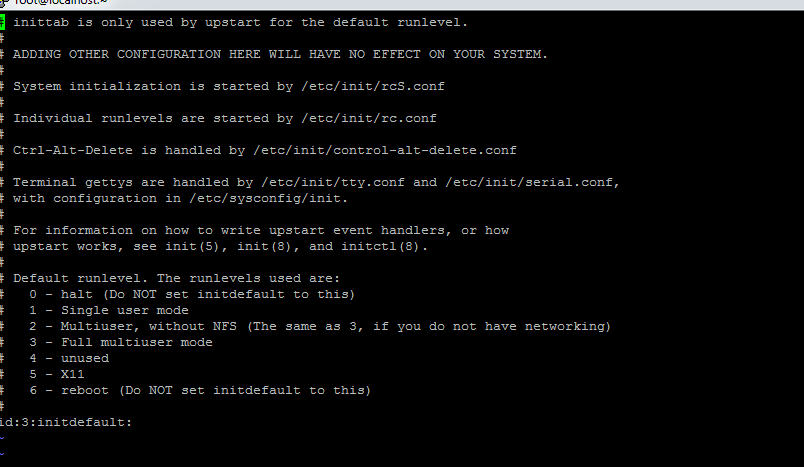
Configuring CentOS Run Levels and Services Understanding CentOS Run Levels CentOS can be configured to boot into one of a number of different run levels. During the boot sequence, a process named init looks in the /etc/inittab file to find the default run level. Having identified the run level it proceeds to execute the corresponding startup scripts … Read more

Why Use Linux?

The reason that you should learn Linux and start deploying Linux is for server functionality. Linux is incredibly rock-solid. Once you install Linux, and once you get through all the quirks and you set up all the configurations, a Linux server will run until the CPU overheats and dies. It would just run non-stop. A … Read more

Server vs. Desktop

There are generally two versions of Linux that everybody is going to provide. Whether you get Red Hat Linux, Ubuntu Linux, Fedora Linux, or whatever distribution that may be, they will normally have two versions of the distribution. One is going to be the server version while the other is going to be the desktop … Read more

Capitalization

Let us now talk about something that just messes with every Windows user’s head when making the switch to Linux: Capitalization. So basically, you have uppercase and lowercase letters. In the Windows operating system, it doesn’t care whether you put in an uppercase or a lowercase letter. If you have a folder named “Home” in … Read more

The Linux Shell

let us now talk about the shell of the Linux operating system. So what is a shell? The shell of an operating system is the screen that you use to interact with the operating system. If you’re thinking about Microsoft Windows, the Windows shell is that graphical user interface where we have the little mouse … Read more

A Brief History of UNIX and C

The first UNIX implementation was developed in 1969 (the same year that Linus Torvalds was born) by Ken Thompson at Bell Laboratories, a division of the tele- phone corporation, AT&T. It was written in assembler for a Digital PDP-7 mini- computer. The name UNIX was a pun on MULTICS (Multiplexed Information and Computing Service), the … Read more