How Facebook Manages their Data Center : Facebook Data Center

facebook server

Facebook has been an industry leader in building its Internet infrastructure for scalability. That includes the scalability of the people that work in the company’s data centers. With more than 900 million active users, Facebook is the busiest site on the Internet and has built an extensive infrastructure to support this rapid growth. The social networking site was launched in February … Read more

Google’s Happy Birthday

google-17th-birthday

Google is celebrating its 17th birthday with a commemorative Doodleharking back to the web of the 1990s. The image, featuring a retro, plastic PC, lava lamp and even 1998’s “Google!” Logo, features on Google’s homepage on September 27, which the internet giant has retroactively chosen as its birthday. However, not even Google seems to really know … Read more

RPM : What is RPM – Red-hat Package Manager

redhat

What is RPM: RPM Package Manager (also known simply as RPM), originally called the Red-hat Package Manager, is a program for installing, uninstalling, and managing software packages in Linux. RPM was developed on the basis of the Linux Standard Base (LSB). In latter-day usage, the “RPM” portion of this term arises from the fact that .rpm … Read more

Iptables: Basic about iptables

firewall

Definition: iptables is a user-space application program that allows a system administrator to configure the tables provided by the Linux kernel firewall (implemented as different Netfilter modules) and the chains and rules it stores. Iptables is a firewall, installed by default. Before we can really get to grips with iptables, we need to have at least … Read more

YUM – What is yum

YUM (Yellowdog Updater Modified) is an open source command-line as well as graphical based package management tool for RPM (RedHat Package Manager) based Linux systems. It allows users and system administrator to easily install, update, remove or search software packages on a systems. yum can perform operations such as: installing packages deleting packages updating existing installed packages … Read more

Dial : Asterisk Command Dial

Asterisk dial command

Dial() is perhaps the most important application in Asterisk. Dial() accepts every valid channel type (e.g. SIP, IAX2, H.323, MGCP, Local, Zap, Dahdi), The allowable parameters are channel-specific; i.e., what parameters a channel requires or will accept depends on the nature of the channel technology. For example, a SIP channel will require an IP address and user information, whereas a … Read more

Macro : Macro in Asterisk

Asterisk dial command

In Asterisk, a macro is a special kind of context which can be expanded within the definition of another context. Its name must begin with “macro-”. A macro is expanded by using the Macro command. All the lines of the macro definition should only use the s extension; the actual extension will come from the line in the calling context on which the macro is expanded. … Read more

Asterisk – Understanding Asterisk Variable

Asterisk dial command

Asterisk can make use of global, shared and channel-specific variables for arguments to commands. Variables are referenced in the dialplan (extensions.conf) using the syntax ${foo:offset:length} where foo is the name of the variable, offset is an optional field indicating which characters should be excluded, and length is an optional field indicating the number of characters from the offset to be returned. … Read more

phpMyAdmin : What is phpMyAdmin?

phpmyadmin

phpMyAdmin is one of the most popular applications, free and open source tool written in PHP, Intended to handle the administration of MySQL with the use of a web browser.  phpMyAdmin also supports a wide range of operations on MySQL, MariaDB and Drizzle. Frequently used operations (managing databases, tables, columns, relations, indexes, users, permissions, etc) can be … Read more

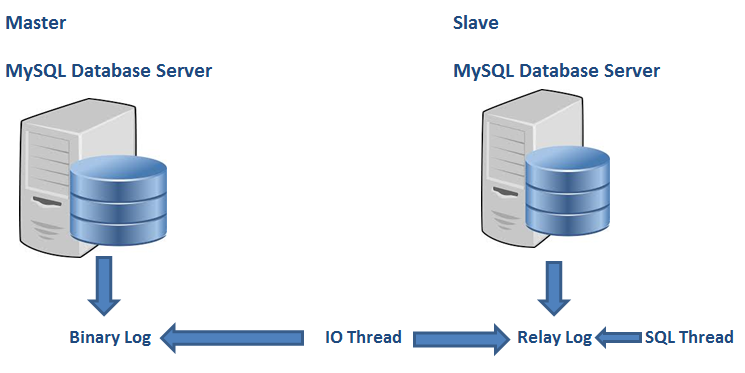
How Does MySQL Replication Works?

mysql replication process

Of course, there are many aspects of MySQL replication, but my main focus will be the logistics – how replication events are written on the master, how they are transferred to the replication slave and then how they are applied there. Note that this is NOT a HOWTO setup replication, but rather a how stuff works type … Read more